Many beginners in online poker make the same mistake — they evaluate their skill based on one evening’s results. Win three buy-ins? “I’m a genius.” Lose five hands in a row? “Poker is not for me.”
But poker works differently. What matters is not what happens today, but what happens over the distance.
1. What is Distance and Why It Matters
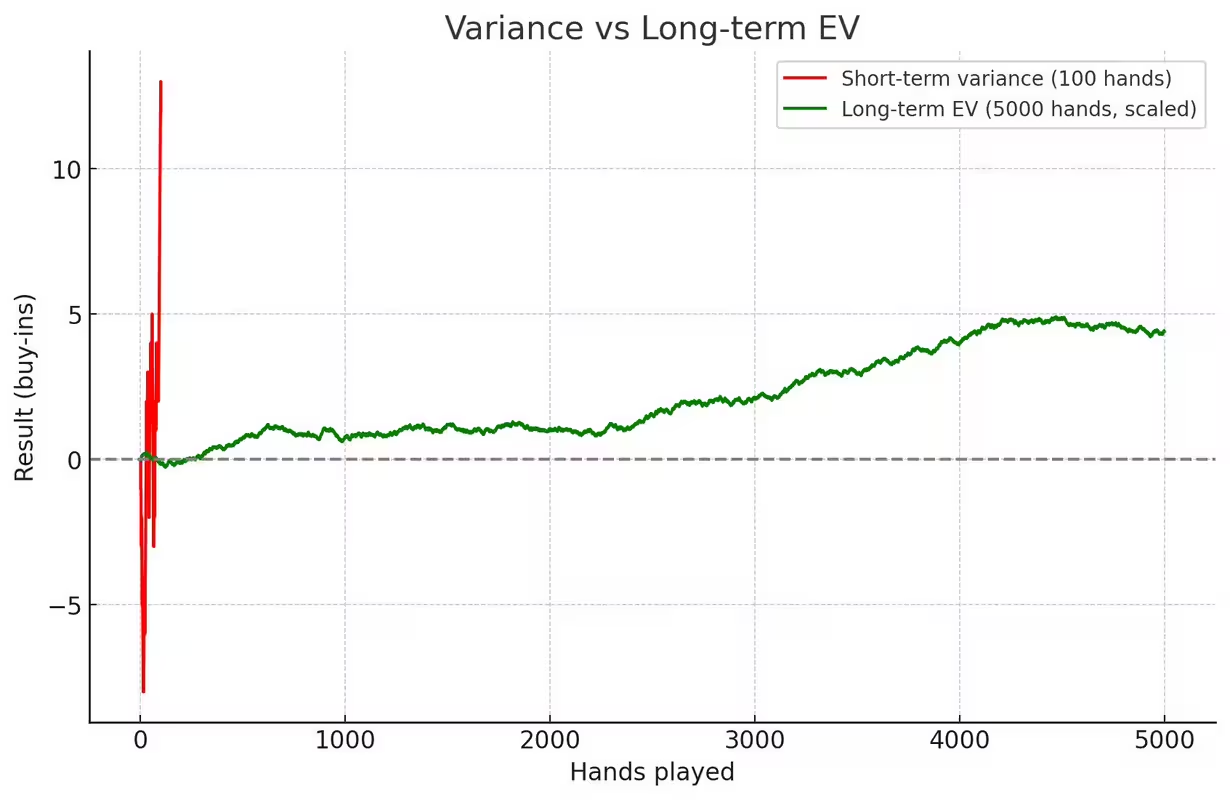
Distance means a large sample of played hands (tens of thousands or more).
- In a single hand, you can make a completely correct decision and still lose — just because the opponent had a stronger card.
- Over distance, luck disappears, and math wins. If your decisions have a positive expected value (EV+), you will consistently show profit.
Example:
Imagine a coin that lands heads 55% of the time. Toss it 10 times, and it might look “normal” — tails could even come up more often. But toss it 100,000 times, and the 5% edge becomes obvious.
Poker works the same way: even a small mathematical edge turns into real money at scale.
Suggested graph:
- Short-term variance curve → looks chaotic, “up and down.”
- Long-term EV curve → smooth upward trend with variance narrowing.
2. Why Game Theory Matters
Game theory in poker explains which actions generate long-term profit:
- Why you cannot always call with the same hand.
- Why aggression (raise, 3-bet) is often better than passivity.
- Why chasing every “pretty” combo is mathematically losing.
Knowing these principles transforms poker from a guessing game into a strategic game with clear logic.
3. Where NZT Gives You the Edge
Here’s where our AI steps in. NZT solves the key problems that beginners face:
- Information volume. To play like a pro, you’d need to study millions of hands. NZT is trained on hundreds of millions — something no single player could ever achieve.
- Opponent adaptation. Regular bots play pure GTO, but NZT goes further: it detects your opponent’s style and exploits weaknesses.
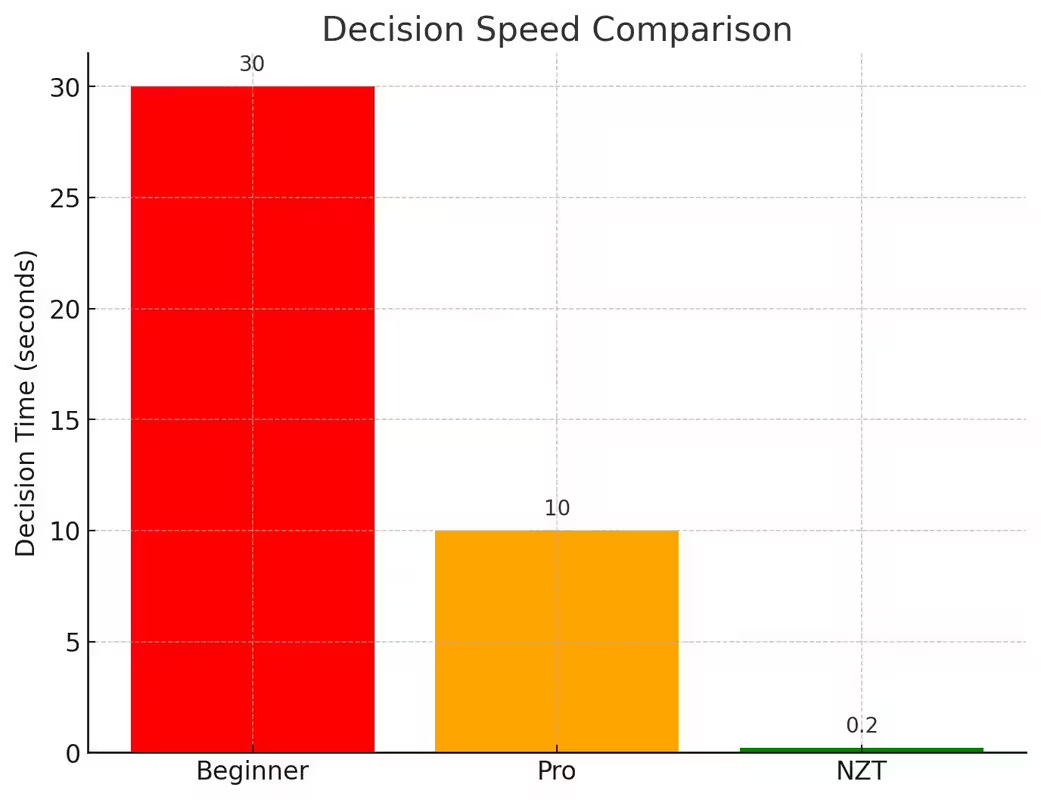
- Decision speed. A beginner may need 30–40 seconds to think. NZT decides in milliseconds, always backed by statistics.
Suggested graph:
- Bar chart comparing decision speed: Beginner (30s) vs Pro (10s) vs NZT (0.2s).
- Win rate comparison: Regular bot (stable but modest) vs NZT (higher, adaptive).
4. Real-Life Examples
Example 1: Weak Player on the Blinds
You raise from the button, and a casual player on the blind calls too much.
- A beginner might not notice.
- NZT instantly sees this via VPIP/PFR stats and opens wider, profiting from that leak.
Result: Many small but steady wins add up to long-term profit.
Example 2: Overvaluing a Hand
Beginners overrate “top pair with a good kicker.” They think catching an ace means “I must win.”
NZT might actually fold here if stats and hand range analysis show the opponent is stronger.
Result: Fewer “expensive mistakes” where you lose your whole stack.
Example 3: Tournament Strategy
In MTTs, many play like it’s cash games and ignore ICM or bounties.
NZT adapts its strategy to blind dynamics, payout structures, and KO opportunities.
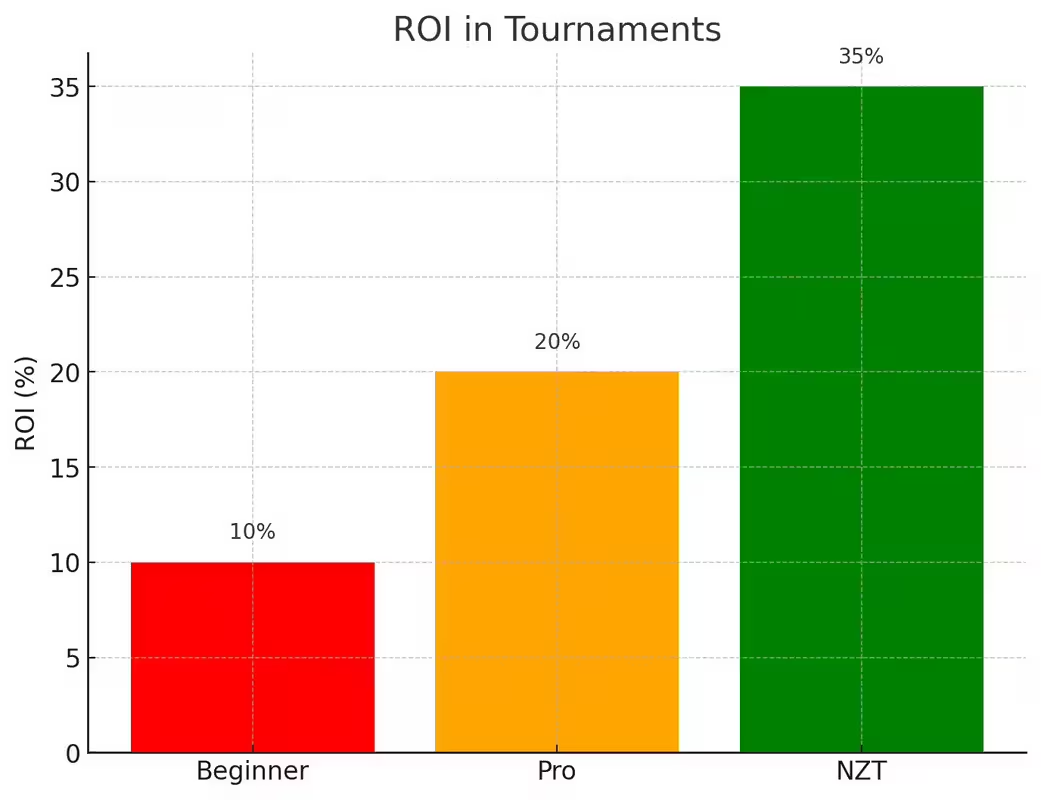
Result: Higher ROI in tournaments where every buy-in matters.
Suggested graph:
- ROI comparison: Beginner (5–10%), Pro (20%), NZT (30%+).
- Tournament equity distribution with vs. without ICM.
5. What a Beginner Gets with NZT
- Instant access to knowledge. Instead of years of study, you get pro-level insights right away.
- Learning through practice. Each session teaches you correct thinking as you see how NZT plays.
- Confidence. Even after a losing day, you know the math is on your side — distance will bring results.
Final Thoughts
Poker is not about “Did I win today?”. It’s about long-term math and distance.
NZT gives you the same edge that always separates pros from amateurs:
- Correct decisions,
- Smart opponent adaptation,
- Stable long-term results.
And while it takes a beginner years to reach this level, with NZT you get access right now.